


A Storyteller
Updated: Aug 22
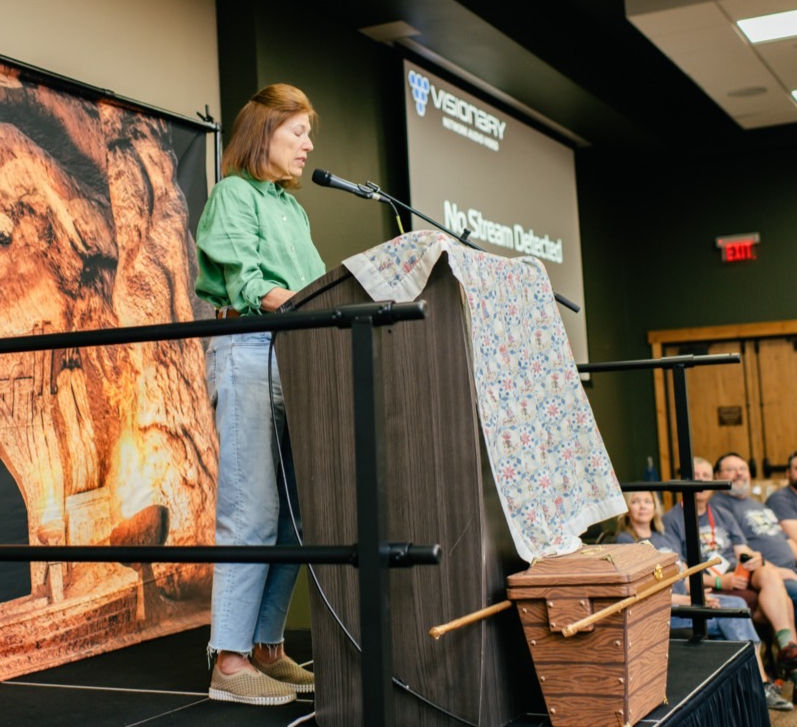
This summer I had the privilege to be one of five keynote storytellers at the 35th annual Domestic Adoption Camp held in Estes Park, Colorado. This camp was a special place where about 100 adopted children and their parents came together to play, learn and normalize what adoption means. Participants shared stories of trauma, love and healing.
Here is my story. I hope you enjoy it.
With love,
Linda
Bittersweet Beginnings
by Linda R Sexton
In adoption, joy and grief often sit side by side. Gratitude and loss walk hand in hand. We learn that two seemingly opposite truths can exist at the same time.
This is one of those stories.
I first met Jenna, my son Finley's birth mother, in 1994—32 years ago. She was sixteen years old and three months pregnant. I will never forget that day.
We were both nervous. I can still picture her standing there with her sweet smile and pixie haircut, clearly trying to be brave.
Over the next six months, we got to know one another. Because we lived in the same city, she visited our home a few times. Mostly, though, we talked on the phone—and boy, could that girl talk!
Before long, I grew to love her. I looked forward to every single moment we had together. As the due date approached, our counselor sat us down to discuss what ongoing contact might look like after placement.
What Jenna said surprised me. "I don't want visits," she said. "I just want pictures twice a year—on his birthday and at Christmas. I think it would be better not to see you guys."
I accepted her decision. Part of me thought distance might make things easier for everyone. After all, she was young and needed to move forward with her life. The counselor didn't challenge the plan, and neither did we. At that time, few people understood the long-term benefits of children knowing their birth families firsthand.
Then everything changed.
After a difficult delivery, and two days spent in the NICU, we brought that precious little bundle home.
A couple of weeks later, the phone rang. It was Jenna. She wanted to see us. She wanted to see the baby. She planned to bring her mother—a woman we barely saw throughout the pregnancy.
The moment I hung up the phone, two emotions collided in me—excitement and fear. I missed Jenna. I genuinely wanted to see her. But another thought immediately crept in.
What if she had changed her mind? What if she wanted her baby back? And why was her mother involved now?
I didn't know what to expect. I only knew that I felt equally hopeful and terrified. A few days later, we carefully buckled our one-month-old into his car seat and headed to a restaurant to meet them. Traffic was awful. The drive normally took forty-five minutes. That day it took nearly an hour and a half.
There were no cell phones. No text messages. No way to tell them we were running late. As the minutes ticked by, my anxiety grew. I imagined Jenna worried that we might not show up. I imagined us walking into a life-changing conversation.
When we finally arrived, I spotted them immediately. They were seated at a table near the entrance, empty iced tea glasses in front of them. The moment they saw us; they stood and greeted us with hugs. We moved to the back of the restaurant, into the non-smoking section.
Then something happened that caught me completely off guard. The instant I set Finley's carrier down, Jenna's mother reached over, unsnapped the buckle, and lifted him into her arms. My heart sank. Without saying a word, she cradled him against her chest for a moment before gently handing him to Jenna.
And, there they were. Mother. Daughter. Baby.
For a few moments, nobody spoke. We simply took turns holding Finley, who decided to be fussy that day. Thankfully, a mirror behind our booth captured his attention and settled him down.
At one point he needed a diaper change, and I asked Jenna if she'd like to come with me. She carried him to the ladies' room, and together we stood over the changing table. Jenna let me handle the stinky honors.
It was such a small moment. And yet it felt profoundly intimate.
Back at the table, it was time to find out what was on Jenna’s mind. I braced myself. Was Jenna about to tell us she had made the biggest mistake of her life? Was she going to ask for more contact than we had anticipated?
What came next surprised me once again. "Can I visit once a month?" she asked. My husband and I exchanged a glance. That was more often than we expected. Still, it felt right and we were committed to open adoption—not knowing what it would or should look like. We opened our calendar and penciled in three future visits, agreeing to see how things unfolded.
Then Jenna's mother reached into a bag. She pulled out a baby blanket. Years earlier, she had embroidered Jenna's name and birth date onto it. Now, she had carefully stitched Finley's name and birth date right under Jenna’s. She handed it to me. And in that moment, I understood.
This wasn't a challenge. It wasn’t a claim. It was an affirmation that she trusted us to raise him.
She wanted Finley to have something tangible that connected him to where he came from. She wanted him to know he belonged—not only to us, but also to them.
I have kept that blanket all these years. And I have carried something else with me as well.
The overwhelming gratitude of becoming Finley's mother. And the enduring sadness that a separation and loss had to occur for that blessing to happen.
Both are true. They always will be.
The monthly visits eventually proved unrealistic, but Jenna remained part of our lives. We saw each other often during Finley's early years and continued finding our way through the joys and challenges of open adoption.
Today, Finley and Jenna travel to see one another at least annually. Our relationships have evolved over the years, sometimes gracefully and sometimes imperfectly. But through it all, we never stopped acknowledging both the love and loss.
And because of that, Finley knows—with every fiber of his being—that he is deeply loved by his mom and by his birth mom.
And perhaps that is the greatest gift open adoption can offer—not the absence of loss, but the presence of a love large enough to hold it.
***
To learn more visit https://www.heritagecamps.org/. This wonderful organization not only organizes camps for parents and adoptees of domestic adoptions, but they also have heritage camps for:
African/Caribbean
Chinese
Indian/Nepalese
Korean
Latin American
Southeast Asian/Pacific Islander
Slavic/Eastern European/Central Asian
***
An now a favor (or three) to ask:
If you or anyone you know has a need for an open adoption speaker, please contact me at lindarsextonauthor@gmail.com. My mission is simply to help those who come after me get comfortable building relationships between adoptive and birth families. I am happy to donate my time and expertise.
If you enjoyed my memoir - The Branches We Cherish: An Open Adoption Memoir - please give me an honest review on Amazon and/or Goodreads. It helps more than you know!
Check out my other blogs at lindarsexton.com


Comments